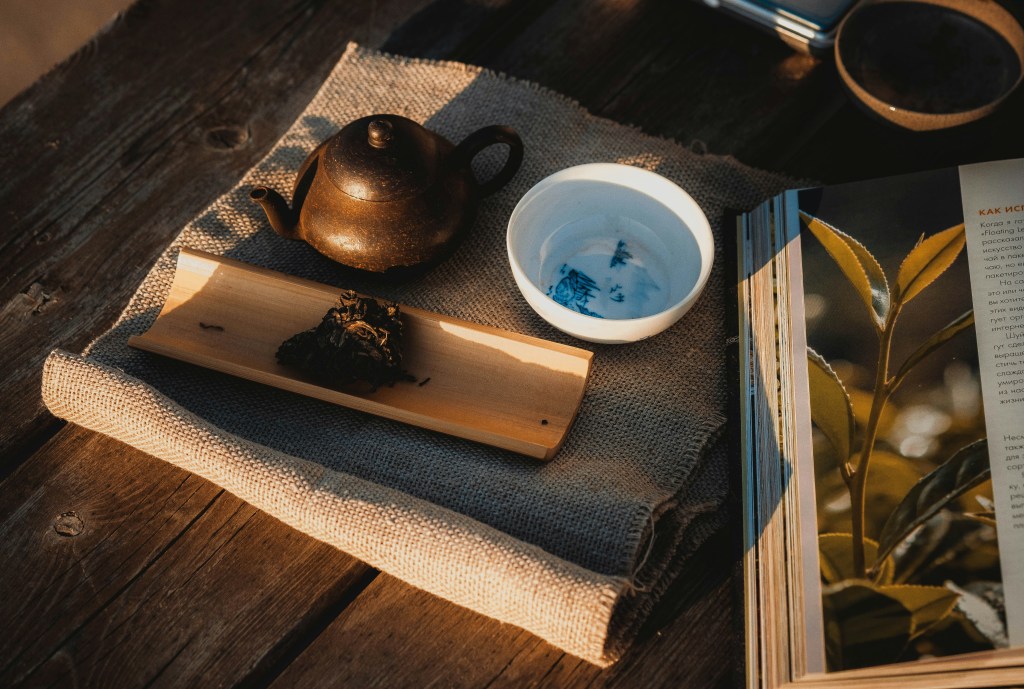
Keywords: Akha minorities, Akha culture, Chinese ethnic minorities, Tea Growing culture, Puer, Yunnan, Asian history
Genre: Historical fiction
Length: short medium long
Country: China/ USA
Review
“It’s said that great sorrow is no more than a reflection of one’s capacity for great joy.”
The Tea Girl of Hummingbird Lane by Lisa See
I picked up The Tea Girl of Hummingbird Lane mostly by chance – it was available on my audio-book app, and it was written by Lisa See, who by now has become one of my all-time favourite authors. What draws me to her work is not just her storytelling, but her authenticity. In her portrayals of Chinese culture, history, and identity, she doesn’t romanticize or over-dramatize China; she writes with accuracy, empathy, and a kind of quiet emotional precision that feels deeply respectful. She doesn’t try to make you cry; she simply tells the story in a way that allows you to feel. She gives you space—space to interpret, to react, to sit with what you’ve read. That’s something I truly value in an author.
At first, I went into this book casually, but by the end, I was speechless.
The Akha World
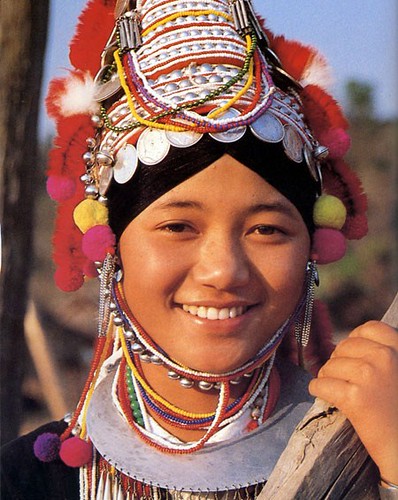
The novel opens in the remote mountains of Yunnan, in a tea-growing region inhabited by the Akha, an ethnic minority I knew nothing about before reading. Through See’s vivid descriptions ( the women’s silver headdresses, the sound of coins clinking as they move) I could begin to picture them. Later, I paused to do some research, which made their world even clearer in my mind.
The Akha culture, as portrayed here, is fascinating and complex—strict in its customs, yet unexpectedly liberal in certain ways. There are rigid rules about gender roles, posture, speech, and respect for elders. And yet, there’s also remarkable freedom in their attitudes toward love and sexuality. Young people are encouraged to “steal love,” to test compatibility before marriage. Divorce, though frowned upon, is possible. The contrast between repression and freedom within this small community is striking and something I haven’t encountered before.
However this is also a world shadowed by its harsh traditions. Early in the story, Li-yan, the protagonist, and her mother, who is the village midwife, attend a birth of twins. In Akha culture, twins are considered “human rejects,” a superstition that condemns them to death because, as they say, “humans don’t give birth to litters.” It’s a brutal moment to read. For a modern reader who values the sanctity of life, it’s horrifying, but it’s also a window into a worldview shaped by survival, isolation, and belief.
Lisa See doesn’t sensationalize this scene. She shows it plainly, letting us confront the cultural logic without justifying it. It’s one of those passages that forces reflection more than reaction.
Tea, Change, and China
While Akha culture is the novel’s emotional foundation, tea is its backbone. At first, tea is simply a part of daily life, common, almost invisible. Then a foreigner arrives, offering work and opportunity, and everything begins to change. The once-remote mountain tribe is drawn into the growing tea economy, especially the world of Pu’er tea, for which Yunnan is famous.
Alongside this economic transformation, Lisa See subtly maps China’s broader political and social shifts: from Mao’s policies to the integration of ethnic minorities. There’s even an anecdote that Mao Zedong reportedly identified 55 ethnic minorities in China, but the Akha weren’t among them. To avoid admitting a mistake, officials merged the Akha with another minority group, an absurd but telling detail about bureaucracy and identity.
“Chairman Mao categorized us as Hani,” we chant together, “one of fifty-five
ethnic minorities in China.”
“Correct.”
Except it isn’t. Mandarin speakers call us Hani. We are called Aini in the local
dialect. But we are neither. We are Akha. When Chairman Mao proclaimed that
China was home to fifty-five ethnic minorities, no one had found us yet. When
we were discovered, powerful people elsewhere said we would become part of
the Hani, because Chairman Mao could not be wrong. Over time another thirty
peoples were added to the Hani, including the Juewei, Biyue, Amu, Enu, and so
many more.
Through these layers, the book moves beyond personal story to depict the collision of tradition and modernity, isolation and globalisation. The more we read, the more the world widens, and so does the reader’s understanding, from the very beginning of the book until the end.
Love and Loss
Amid this backdrop, Li-yan’s story unfolds, a love story but also a story of separation and survival. She falls in love with a boy she first met in childhood, when they both got into trouble over a scallion pancake. Their relationship faces every possible obstacle: family disapproval, incompatible birthdates, and rigid tradition. It’s almost a Chinese Romeo and Juliet, only quieter, sadder, and more realistic.
When Li-yan becomes pregnant, her lover has left for Thailand to earn money so he can return and prove himself worthy. In his absence, forever waiting for his return, Li-yan gives birth under her mother’s care. According to Akha law, an unmarried mother’s baby must die. None of the women can bring themselves to do it. The scene is one of the most intimate and hurtful scenes I’ve read in a long time. The child is secretly spared and we later find out that it has been adopted by an American family.
From here, the novel follows two parallel lives: Li-yan’s in China and her daughter Haley’s in the United States. I usually dislike stories that jump through time or switch between generations as they often feel disjointed, but in this case, I didn’t mind it at all. Some readers have said Haley’s chapters feel underdeveloped, but I see that differently. This isn’t Haley’s story. The focus is, and should be, on Li-yan, the woman who carries the weight of loss, choice, and cultural transformation. And truly, the path Li-yan will walk on is a path filled with hardship, work, betrayal but also love and newfound hope.
Lisa See’s Craft
Listening to this as an audiobook was an experience in itself. Beyond the narrator’s voice, the prose sounded beautiful, it flowed naturally, logically, and rhythmically. That’s how I know a book is well written: when it makes sense not just on the page but aloud. Lisa See’s storytelling has that kind of internal music.
The descriptions of culture, tea cultivation, and Chinese history are detailed but never overwhelming. You always know where you are and why each detail matters. The prose balances knowledge with emotion enough context to teach you, enough heart to move you.
If you’re interested in China – its minorities, its landscapes, its shifting identity under political and social pressures – this book is a remarkable window. And if you’re someone who doesn’t like being emotionally manipulated by fiction, this is perfect. It’s deeply emotional, even painful at times, but See never pushes you. She trusts her reader to feel.
Final Thoughts
The Tea Girl of Hummingbird Lane is not an easy book, but it’s an unforgettable one. It combines history, anthropology, and motherhood into a narrative that feels both intimate and immense. I finished it feeling grateful – grateful that writers like Lisa See exist to bridge cultures with honesty and grace.
Next summer, if all works well, I’ll be traveling to Yunnan, and reading this made that journey feel even more meaningful. I hope I’ll have the chance to visit Pu’er and maybe see some Akha people, knowing a little more about the layers of history and humanity that shape their world.
Highly recommended.
To learn more about the Akha, you can visit the Atlas of Humanity: Akha







 Musings of a reading addict
Leave a comment