Keywords: Chinese fiction, rural China, resilience, determination
Genre: Fiction
Length: short medium long
Country: China
Synopsis
From one of China’s foremost authors, Jia Pingwa’s Happy Dreams is a powerful depiction of life in industrializing contemporary China, in all its humor and pathos, as seen through the eyes of Happy Liu, a charming and clever rural laborer who leaves his home for the gritty, harsh streets of Xi’an in search of better life.
After a disastrous end to a relationship, Hawa “Happy” Liu embarks on a quest to find the recipient of his donated kidney and a life that lives up to his self-given moniker. Traveling from his rural home in Freshwind to the city of Xi’an, Happy brings only an eternally positive attitude, his devoted best friend Wufu, and a pair of high-heeled women’s shoes he hopes to fill with the love of his life.
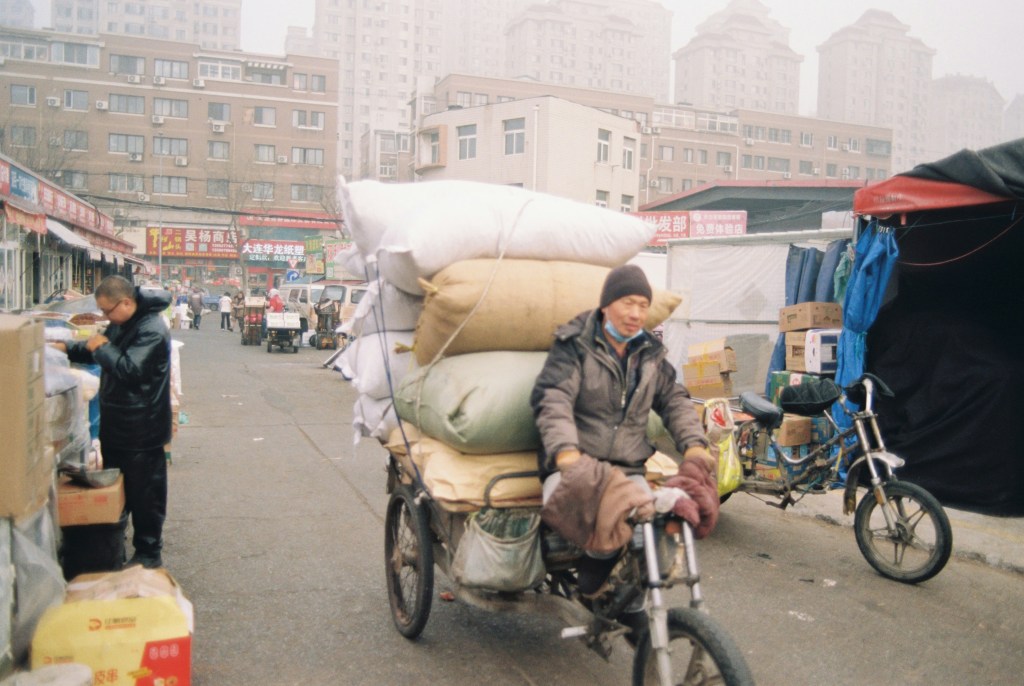
In Xi’an, Happy and Wufu find jobs as trash pickers sorting through the city’s filth, but Happy refuses to be deterred by inauspicious beginnings. In his eyes, dusty birds become phoenixes, the streets become rivers, and life is what you make of it. When he meets the beautiful Yichun, he imagines she is the one to fill the shoes and his Cinderella-esque dream. But when the harsh city conditions and the crush of societal inequalities take the life of his friend and shake Happy to his soul, he’ll need more than just his unrelenting optimism to hold on to the belief that something better is possible.
REVIEW
“Change what you can change, adapt to what you can’t change, put up with what you can’t adapt to, and let go of what you can’t put up with.”
Lately, I’ve read quite a few books, but unfortunately none of them impressed me enough to sit down and write about them. However, this isn’t all bad because it made me realise I have never told you about this book: Happy Dreams by Jia Pingwa.
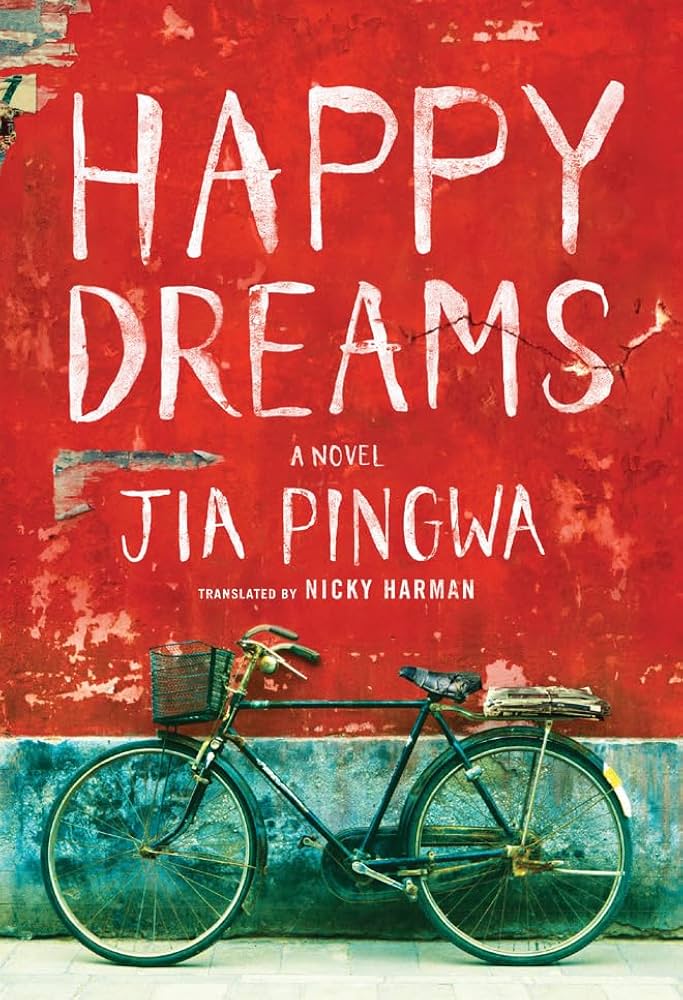
While it’s one of my favourite books, its qualities are not necessarily “flashy”. There are no dramatic twists, no grand philosophical breakdowns, no carefully constructed “wow” moments. If anything, it feels almost understated. And yet, it’s one of those books that stays with you long after you finish it.
At its core, Happy Dreams is about resilience—about the strange, often quiet ways in which people continue moving forward even when life gives them very little to work with. Don’t let yourself be misled by the gravity of the word “resilience” though for Happy Liu is determined to infuse you with his joy!
We follow Hawa Liu, who calls himself Happy Liu, a character who is both simple and unexpectedly compelling. His journey begins with a rather unusual goal: to find the person who received his donated kidney. This search takes him to Xi’an, joined by Wu Fu, his loyal and equally memorable friend. Along with determination and his friend, Happy Liu carries with him a pair of red shoes to give to the love of his life, whomever that may turn out to be.
“We’ve come to Xi’an of our own accord, and we have to accept it as it is. It isn’t as good as what we imagined, but it’s nowhere near as bad as you make it out to be. We have to put up with it, there’s no use complaining. It only makes it more difficult to have a good life here. We have to get Xi’an to accept us, Wufu. We have to believe we can live well here, and see things differently. For instance, if you see a tree by the road that’s been blown over by the wind, think of it as our tree and go straighten it.”
What follows is not an adventure in the traditional sense. Their lives unfold through a series of situations that are, for the most part, ordinary. But it is precisely in this “ordinariness”, if that’s a word, that the novel finds its strength. Again and again, we see them challenged and yet they persist.
It’s also a piece of literary realism. Throughout it all we learn so much about real life, body excretions and sound vibrations all included. It’s a fantastic glimpse into Chinese thought and culture at grassroots level. Someone was saying in a Goodreads review that the situations and circumstances our characters find themselves into are not unfamiliar, however the way they respond to them is profoundly chinese. And they were so right about it!
“I used a lump of coal to scratch a notice on the wall by the entrance: “Pissing and shitting strictly forbidden. Offenders will be punished.” It had no effect at all. Later, I added a new notice: “Beware, haunted house.” That put a stop to it.”
Looking back on it now, I realise that it’s reminding me of so many other books:
- First of all, due to the realism and social commentary, of course it reminds me of Charles Dickens’ books; while I would say that it’s a lot more character-forward than Dickens, the resemblance remains
- I can’t help but also see them as a kind of Chinese version of Don Quixote and Sancho Panza. Not because the stories are similar in structure, but because of the dynamic between them, and the way they move through the world with a mix of hope, illusion, stubborn determination and humour – albeit not intended
- It also reminded me of The Morgue Keeper, which I talked about some time ago. Completely different context, but a similar emotional core. In both, we see characters who are shaped and often pushed down by forces outside their control, yet still manage, somehow, not to collapse entirely.
- Another connection that came to me is with Rickshaw Boy by Lao She (this one also has a review on the blog). There, too, we follow a character trying to build a better life, navigating both honest work and questionable opportunities, only to realize how much is stacked against him. The difference, perhaps, is in the outcome—in how much a person can endure before they simply cannot continue.
And this is what makes Happy Dreams stand out to me. It doesn’t offer a single answer to hardship, it’s not preachy, it’s not a book that feels like a life-manual. Instead, it presents different ways of enduring it. Some moments feel almost absurd, others quietly devastating, but none of them feel artificial. Through everything it’s Happy’s attitude, humour and sincerity that shines. Example below:
“Would you like to use the WC?” I said, pointing in the direction of the shit-house. I wished she would, because then I could quickly tidy up my room, or at least fold the quilt neatly and put the lid on the unwashed pan.”
What follows after the quote above is such a comic scene that I cannot stop but laugh even now! (btw, he was talking to a girl he was about to bring home. Can you imagine offering your love interest, in a final act of desperation, to use the uhm…shit-house… just so you can fix up your house before they come in???)
Overall, trying not to spoil anything about Happy Dreams by Jia Pingwa
What stayed with me most is not a specific scene, but a general sense that, despite everything, these characters do not entirely lose themselves. Life wears them down, certainly, but it doesn’t empty them out completely.
And maybe this is why I think books like this matter now more than ever.
We live in a time that feels increasingly unstable – economically, politically, socially. There is a constant sense of uncertainty, and in that context, stories about invincible characters or overly dramatic conflicts start to feel a bit disconnected. What feels more relevant are stories about ordinary people, placed in difficult situations, who push through… not perfectly, not aided by supernatural powers, but through sheer determination and a stubborn, positive outlook on their life.





 Musings of a reading addict
Leave a comment