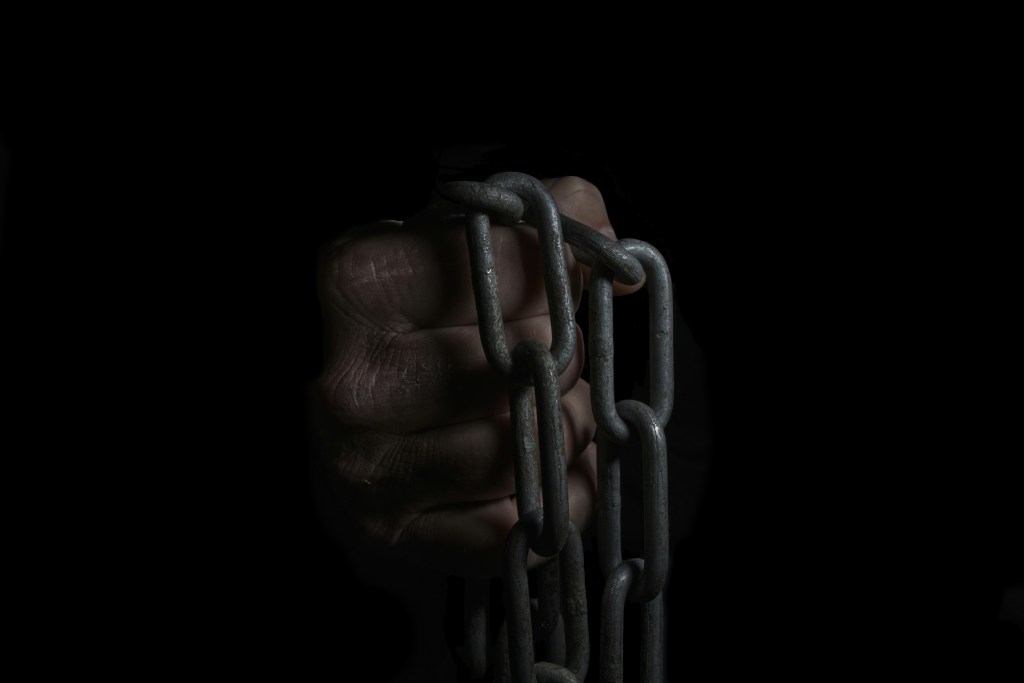
“Which would frighten you more? A slave who is crazy or a slave who is sane and sees you clearly?”
Keywords: American literature, slavery, retelling, Adventures of Huckleberry Finn and James
Genre: Fiction
Length: short medium long
Country: United States of America
Review
“I can tell you that I am a man who is cognisant of his world, a man who has a family, who loves a family, who has been torn from his family, a man who can read and write, a man who will not let his story be self-related, but self-written.”
There’s a certain dissonance that comes with reading a highly decorated book and walking away unmoved, or worse, unconvinced. James by Percival Everett—winner of the 2025 Pulitzer Prize and several other major literary awards—was, for me, one of those reads. While I understand the cultural importance and symbolic power of retelling The Adventures of Huckleberry Finn through the voice of an enslaved man, I found myself asking, repeatedly: to what end?
The premise is compelling: James, formerly Jim, is no fool, but a brilliant man forced to pretend to be ignorant for the sake of survival in a racist society. It’s a reversal of the passive, sidelined character in Twain’s novel. But despite this intellectual reimagining, James remains a strangely opaque character. He escapes, he survives, he wants to free his wife and daughter—but how? His goals are vague, and his plans are contradictory. Beyond the idea of a hidden genius, we don’t truly get to know him. His voice, while often ironic or philosophical, felt like a sketch of depth rather than depth itself.
Stylistically, the novel swings between satire, slapstick, and sudden tragedy. At times, I wasn’t sure what I was reading—was it supposed to be funny, painful, exaggerated, or all three at once? The tonal inconsistency made it difficult to emotionally invest. One moment James is bantering with Enlightenment philosophers in imagined conversations, the next he’s escaping from yet another improbable scenario. It began to feel more like a string of conceptual set-pieces than a coherent narrative.
There’s also a strong undercurrent of critique—particularly against Christianity and the motives of white abolitionists—which felt more like the author’s agenda than a natural extension of James’s character. While critiques of religion’s misuse in justifying slavery are historically accurate and entirely valid, the novel sometimes pushes this to a point where it seems to speak over its characters rather than through them.
“Religion is just a controlling tool they employ and adhere to when convenient.”
Similarly, the portrayal of white guilt—hinting that any act of abolition was more about shame than morality—feels overly simplistic. Must all redemption be suspect just because it comes from the privileged? Isn’t the process of reckoning and moral evolution a part of being human, regardless of race?
“I considered the northern white stance against slavery. How much of the desire to end the institution was fueled by a need to quell and subdue white guilt and pain? Was it just too much to watch? Did it offend Christian sensibilities to live in a society that allowed that practice? I knew that whatever the cause of their war, freeing slaves was an incidental premise and would be an incidental result.”
And then there’s the absence of women. It’s not that I expect every novel to feature strong female characters, but in a book centered on slavery—where the fates of women were inseparable from its horrors—it was jarring. The only female character of note is a rape victim who dies shortly after being introduced. James’s own wife and daughter are central to his supposed purpose, yet completely absent in substance. If the novel’s mission is to correct the silences of history, why preserve this one?
My critique isn’t that James is a bad book. It’s clearly intelligent, timely, and raises essential conversations. But is it good enough to be held up as the literary standard of our time? That’s where I have my doubts. When we award books with such prestige, we’re telling readers: this is the best literature of this moment. That claim carries real weight—especially in a time when young people are questioning historical realities like slavery and the Holocaust. Literature, now more than ever, has a role in educating and awakening, not just venting or echoing pain.
I’m concerned by the way public discourse around books like James tends to shut down criticism. Readers who voice even mild dissatisfaction are often met with hostility. But critical thinking shouldn’t stop where the awards begin. James is, in my view, more of a conversation starter than a literary masterpiece. Its rage is justified, its themes are real, but its execution leaves too much unsaid, underdeveloped, or misdirected.
We should be more thoughtful about what we honor—because what we honor, we teach.
“How strange a world, how strange an existence, that one’s equal must argue for one’s equality, that one’s equal must hold a station that allows airing of that argument, that one cannot make that argument for oneself, that premises of said argument must be vetted by those equals who do not agree.”







 Musings of a reading addict
Leave a reply to Musings on Four treasures of the sky by Jenny Tinghui Zhang – Musings of a reading addict Cancel reply