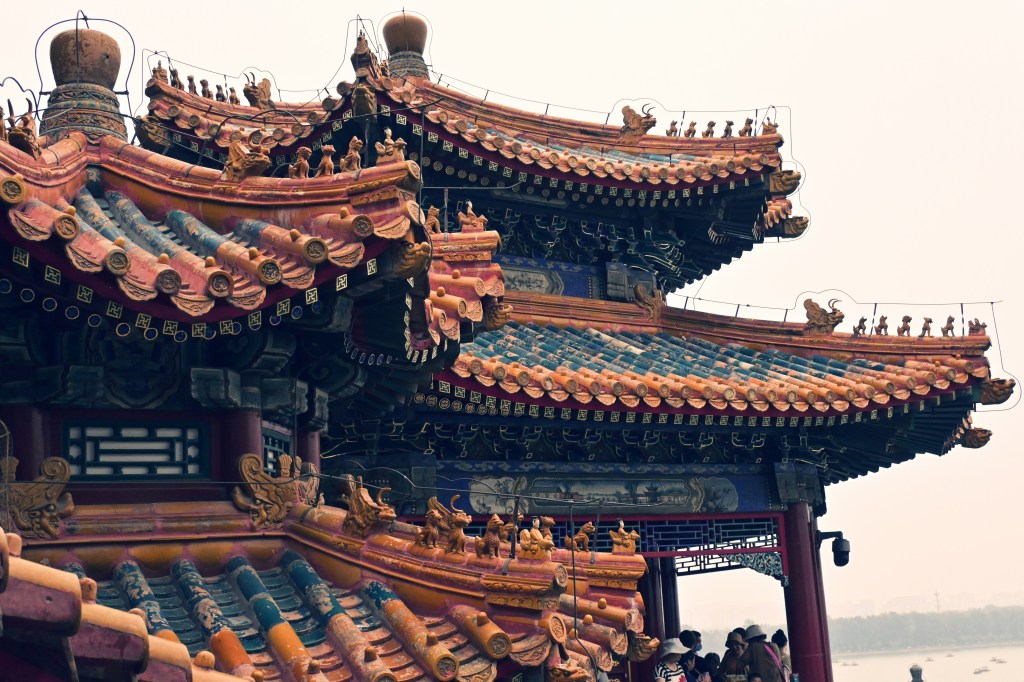
Keywords: Chinese literature, historical fiction, Empress Dowager CiXi, last empress of China, Pearl S. Buck
Genre: Historical fiction
Length: short medium long
Country: China
Review
“Who rules well is always hated.”
I read Imperial Woman during a time when I was overwhelmed with exam preparation, mentally and emotionally exhausted. I didn’t feel ready to engage with something as weighty as the story of Empress Dowager Cixi. But I pressed play on the audiobook—and from that moment, I was swept away. Despite the stress I was under, this novel pulled me in and held me with such intensity that I knew it was something special.
Pearl S. Buck introduces us to Orchid (the fictionalized name for Cixi), a young Manchu girl who rises from village life to the center of imperial power. The pacing is elegant: we begin in a quiet rural setting, where we see the preparations for Orchid’s entrance into the Forbidden City, and from there, the story unfolds seamlessly. Buck takes us on a journey through court politics, maternal sacrifice, betrayal, strategy, and emotional solitude.
What struck me most was the emotional depth of Orchid’s character. She is ambitious and calculating, yes—but not cold. She is deeply aware of her responsibilities and of how others perceive her, especially as a woman in a position of unprecedented authority. Her intelligence and political instinct are undeniable, but so is her loneliness. Even those she trusts most, like the eunuch An-te-hai, ultimately let her down.
Orchid’s rise to power following the emperor’s death was one of the most fascinating parts of the novel for me. She skillfully outmaneuvers the eight regents and seizes control as Empress Dowager. Yet even as she rules, she never stops being a mother—first to her son, Tung Chih, and later to her chosen heir. But both boys fail to live up to her hopes, forcing her again and again to take power into her own hands.
Some characters and relationships are fictionalized, but often inspired by historical figures. The love interest, Jung Lu, is based on Ronglu, a trusted general and high-ranking official. The character Sakota, who serves as a rival empress, draws from Empress Dowager Ci’an, a real historical figure from the Sakda (Sakota) clan. These figures ground the novel in reality, but Buck weaves their stories with imaginative depth, creating emotional resonance beyond the facts.
What I appreciated most was how the novel offers a counter-narrative to the idea of Cixi as merely a tyrant. “Who rules well is always hated,” Buck writes—and this line stayed with me. History often judges harshly, especially when the ruler is a woman. Buck, having grown up in China as the daughter of missionaries, writes with rare empathy and cultural insight, especially in moments like the Boxer Rebellion, where perspectives collide.
Imperial Woman is more than historical fiction; it is a human story about leadership, sacrifice, and survival. It gave me a sense of understanding, not only of Cixi’s world, but of the weight of power and the cost of responsibility. I highly recommend it.









 Musings of a reading addict
Leave a reply to Musings on the best books I’ve read in 2025 – Musings of a reading addict Cancel reply