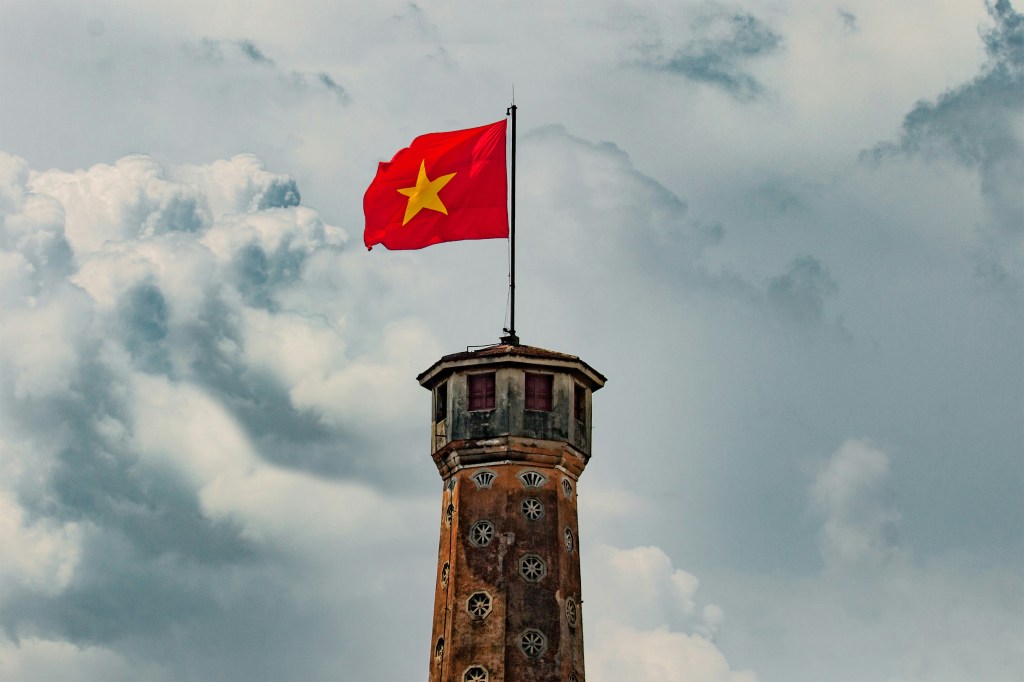
Keywords: Vietnam History, Vietnam War, Family Saga, French Occupation in Vietnam, Land Reform in Vietnam, Intergenerational Trauma
Genre: Historical fiction
Length: short medium long
Country: Vietnam
Review
“The challenges faced by the Vietnamese people throughout history are as tall as the tallest mountains. If you stand too close, you won’t be able to see their peaks. Once you step away from the currents of life, you will have the full view.”
When this book came out, I was very reluctant to read it. I usually am when something becomes “the book everyone talks about.” Hype doesn’t attract me; it pushes me in the opposite direction. Five years later, I finally picked it up and I genuinely don’t regret it. I won’t go into the detailed plot here, but rather into the themes and what I personally took from the novel.
A necessary context point: I’m not American. I wasn’t born, raised, or educated in the U.S. I’m Eastern European, far outside the historical and emotional landscape that dominates most discussions around the Vietnam War. In America, it’s “the Vietnam War.” In Vietnam, it’s literally “the American War.” Reading other reviews, most were by American readers who were suddenly discovering the Vietnamese point of view: the colonial past, the internal divisions, the layers of conflict. I wasn’t having that revelation. I came to this book as a complete outsider to the narrative.
What I found fascinating, however, was the book’s own attention to perspective. One of the characters reads American literature and concludes that if people actually read each other’s books, they would understand one another enough not to go to war. It’s idealistic, yes, but also a beautiful statement about empathy and the strange power literature has to humanise “the other.”
“But by reading their books, I saw the other side of them – their humanity. Somehow I was sure that if people were willing to read each other, and see the light of other cultures, there would be no war on earth.”
As for the novel itself: structurally, it is exactly the kind of book I normally dislike. Multiple timelines, interwoven narratives, past/present fragmentation — all of that usually irritates me. And yet here, none of it did. The story pulled me in immediately. We begin with a young girl clinging to her grandmother desperately trying to find a bomb shelter. We get acquainted with their reality, with the world of illegal trading, loss, poverty, war. Then, through the grandmother’s own voice, we move back into her history: six children, the Land Reform, hunger, violence, and every possible hardship that entire generations of Vietnamese people endured. In parallel, we also see the granddaughter’s present: her father and uncles gone to war, her mother gone in search of her missing husband.
“If I had a wish, I would want nothing fancy, just a normal day when all of us could be together as a family; a day where we could just cook, eat, talk, and laugh. I wondered how many people around the world were having such a normal day and didn’t know how special and sacred it was.”
One theme the book captures incredibly well is intergenerational trauma. I usually dislike how casually this term is thrown around in modern discourse. But here, it is used in its truest sense: the transmission of suffering across decades, shaped by historical events rather than buzzword psychology. Soldiers return from war missing limbs, missing memories, or missing any sense of direction. They drink, they fight, they shut down. One character has a child born malformed due to chemical exposure. The war doesn’t end when the peace treaty is signed; it continues in bodies, families, and entire bloodlines.
Despite the large cast and fragmented structure, the characters never blend together — something many books fail at. There’s a scene between a mother and her daughter (the girl is around nine) where the child behaves exactly like a child: emotional, irrational, infuriating. I found myself genuinely angry at her only to later realise that this level of reaction only happens when a character is written with precision.
For me, this book was an eye-opener, not only for the personal stories but for the history behind them. Reading it made me want to go and learn more — to read more about Vietnam, about the lived experiences behind the “big events,” the small histories that governments and official narratives often bury.
There’s a quote in the book that struck me: “If our stories survive, we will not die, even when our bodies are no longer on this Earth.” Memoirs could say this, nonfiction could say this — but fiction achieves it differently. Fiction is what slips directly into the reader’s emotional system. Fiction makes the history impossible to ignore. And this novel is a perfect example of that. It didn’t just entertain me; it pushed me to educate myself further.
“If our stories survive, we will not die, even when our bodies are no longer here on this Earth.”
I listened to the audiobook rather than reading the physical copy, and I strongly recommend that format. The narrator is Vietnamese, and hearing the names and language pronounced correctly added a layer of authenticity I couldn’t have gotten on my own.
All of this is a long way of saying: yes, I recommend this book. Buy it, borrow it, listen to it — just read it.
“Human lives were short and fragile. Time and illnesses consumed us, like flames burning away these pieces of wood. But it didn’t matter how long or short we lived. It mattered more how much light we were able to shed on those we loved and how many people we touched with our compassion.“



 Musings of a reading addict
Leave a reply to Musings on the best books I’ve read in 2025 – Musings of a reading addict Cancel reply