Keywords: Chinese literature, Social realism, Rickshaw Boy by Lao She, Chinese culture, Chinese history
Genre: Fiction
Length: short medium long
Country: China
Review
“He did not smoke, he did not drink, and he did not gamble. With no bad habits and no family burdens, there was nothing to keep him from his goal as long as he persevered. He made a vow to himself: in a year and a half, he—Xiangzi—would own his own rickshaw.“

I read a lot of Chinese literature, and if you have been on this blog for some time, you have probably noticed that I have a certain affection for the East Asian space, especially China. Still, it is only fairly recently that I started reading Chinese authors more systematically. While I am quite comfortable with contemporary writers such as Mo Yan or Yan Lianke, literature written in the early decades of the twentieth century has always made me slightly hesitant. When I think of Chinese literature, my mind immediately goes to Dream of the Red Chamber, to Laozi, Confucius, The Art of War. Very classical, very serious, very philosophical works, which I deeply respect but which I cannot always approach casually or without preparation. These are not books I instinctively pick up for an afternoon of relaxed reading.
That is why I am genuinely grateful for the internet and for the accessibility of audiobooks and ebooks, because this is how I came across Rickshaw Boy by Lao She. I was reluctant before starting it, partly because I did not know what to expect and partly because I feared a dense, heavy style. Having finished it, I can honestly say that this book is a precious piece of literature and one that I believe everyone should read.
China is, in my opinion, a deeply misunderstood country. We tend to fall victim to two very different kinds of propaganda. Growing up in the Western world, I was exposed to a narrative of China as a hopeless communist dystopia, a place where you are imprisoned for everything, where life is constantly surveilled, where people dream only of escape. Later, as I grew older, learned the language, and eventually visited the country, I encountered a very different discourse. That doesn’t mean idealizing China or denying the realities of censorship, control, or human rights abuses. It means acknowledging perspective, history, and experience.
Reading Rickshaw Boy does something essential: it forces you to confront where modern China actually comes from.
The more I learn about China, the more I am struck by the resilience of its people. This is not a single people, but many peoples, cultures, and ethnicities spread across a landmass comparable to a continent. From the earliest historical sources, China has endured famines, floods, natural disasters that wiped out millions, internal conflicts, external invasions, and repeated cycles of destruction and rebuilding. There were periods of fragmentation such as the Three Kingdoms, long dynastic successions with both competent and disastrous rulers, the cultural flourishing of the Tang, the poetic refinement of the Song, and finally the Qing dynasty, which collapsed under the weight of its inability to reconcile tradition with the accelerating pace of global change.
The Qing had to face poverty, famine, internal unrest, and relentless foreign pressure, from the Opium Wars to the carving up of ports and the imposition of foreign legal systems on Chinese soil. When something as vast and complex as China breaks down, it is unrealistic to expect it to reemerge neatly aligned with abstract political ideals (expecting a democracy to come forth).
“He put up with the pain, no matter how bad it got, knowing that it was inevitable, a necessary passage on the way to where he was going. Without passing this test, he would never be able to go out and run as he wanted.”
The novel was written in the mid 1930s and depicts the 1920s, the period after the fall of the Qing dynasty and before the Communist revolution: a time of warlords, fragmentation, and total instability. This is a China in pieces. The old imperial world is gone, but nothing viable has replaced it. What exists instead is a strange and cruel coexistence of realities: crushing poverty alongside coffee shops, cinemas, and imported modernity; misery and ambition sharing the same streets.
Lao She knew this world intimately. By the time he wrote this novel, the promises of reform, progress, and national salvation had already failed him. And Rickshaw Boy reads like a reckoning.
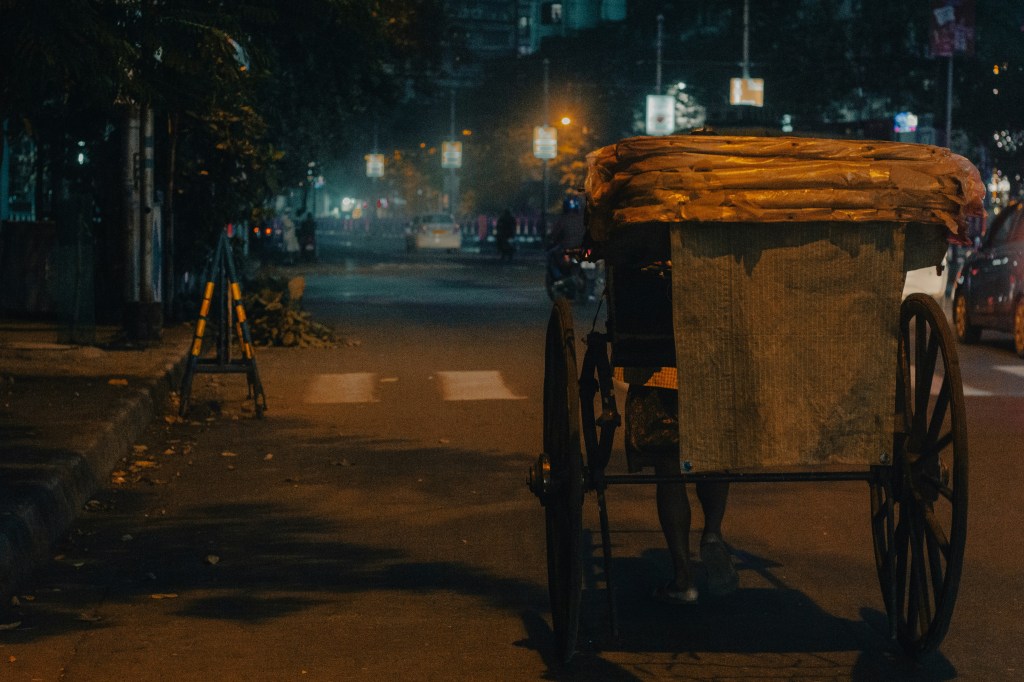
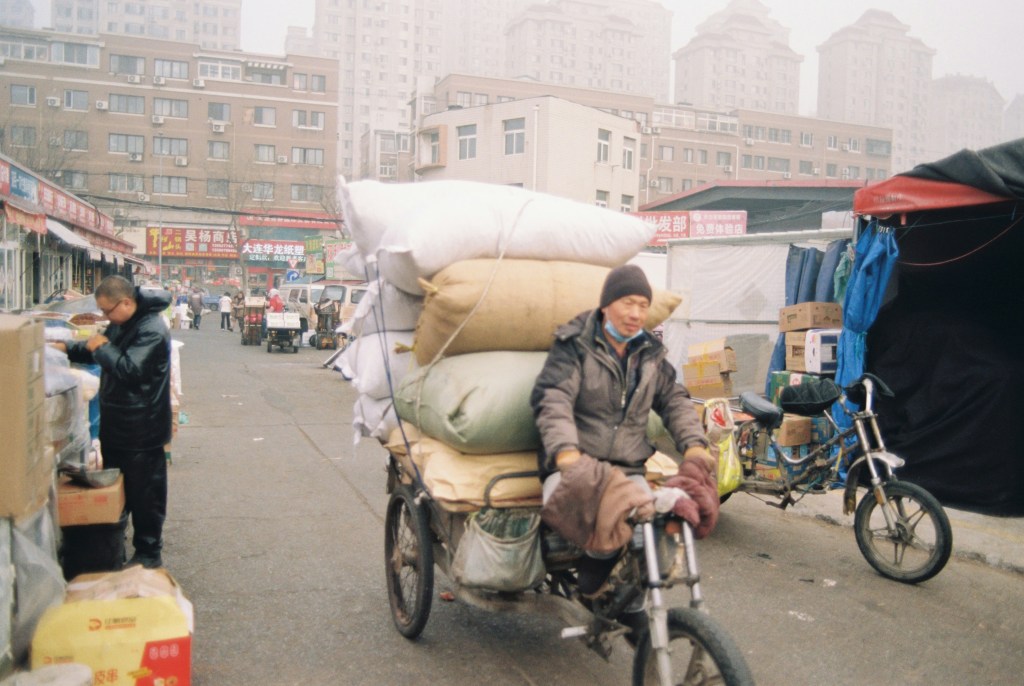
Xiangzi, the novel’s protagonist, is an orphan who arrives in Beiping (today’s Beijing) with nothing but his body and his determination. He is young, strong, disciplined, proud. He doesn’t drink, doesn’t steal, doesn’t waste himself. His dream is painfully modest: to save enough money to own his own rickshaw, so he won’t have to rent one, so he can be independent, respectable, self-made. There is nothing grandiose here, nothing revolutionary. Just effort, consistency, and faith in work.
And for a brief moment, you believe in that dream—just as Xiangzi does.
That belief is what makes the novel unbearable.
Because what follows is not the story of a man who fails due to weakness or vice, but of a man ground down by a society that has no room for moral coherence. Xiangzi is captured by soldiers and loses everything. He is pulled into a suffocating, manipulative relationship that drains him emotionally and materially. One by one, every attempt at rebuilding collapses—not because he stops trying, but because the world around him makes effort meaningless.
The most devastating part of Rickshaw Boy is not the poverty. Poverty, brutal as it is, is almost secondary. What truly breaks Xiangzi is the slow erosion of belief: belief in work, in fairness, in the future, in himself. He doesn’t simply give up. He adapts. He conforms. He becomes what the world rewards him for being.
And that, I think, is Lao She’s most merciless insight.
This is not the portrait of a man defeated by society. It is the portrait of a man recreated in society’s own image. And I’m not convinced that’s not worse.

Lao She was deeply influenced by Western literature, particularly Charles Dickens. You can feel this influence in the attention to social detail, the compassion for the urban poor, and the way individual suffering reflects systemic cruelty. At the same time, it does not feel like imitation. It feels more like recognition, as if Lao She found in Dickens a language that helped him articulate what he had already seen and lived through himself. For me, this connection is especially fascinating given the historical moment in which he was writing.
There is also a deeply tragic dimension to Lao She’s personal life. He was acquainted with Pearl S. Buck (she was the one who translated Rickshaw Boy in English), and she and her husband reportedly tried to convince him not to return to China before the Communist takeover. He did return, and during the Cultural Revolution he was subjected to public humiliation and persecution similar to what is described in The Morgue Keeper, a book I reviewed last year and which I strongly recommend reading alongside this one. Lao She died in 1966, officially by suicide, after drowning himself in Taiping Lake. Whether this was truly suicide or the result of violence remains uncertain.
What makes this even more poignant is the fact that Lao She had been baptized as a Christian. According to his wife, he did not openly practice or speak much about faith, but she said that he carried a quiet sense of salvation within him. It is difficult not to imagine how this inner tension, between hope and disillusionment, belief and historical brutality, must have weighed on him.
Rickshaw Boy is a devastating novel, but it is also an essential one. Even if you have no particular interest in China, its history, or its politics, you will still find here a powerful story and an extraordinary piece of literature. If you are interested in China, then this book becomes almost indispensable. It offers a glimpse into a society at its breaking point and into the human cost of historical upheaval. I cannot recommend it enough, and I sincerely hope it encourages more readers to explore Chinese literature, because there is so much there that deserves to be read, discussed, and understood.








 Musings of a reading addict
Leave a reply to Michelle Cancel reply