Keywords: Kaifeng Jews, Historical fiction, Foreigners in China, Cultural assimilation, Duty vs personal desire, Judaism in diaspora, 1850s China
Genre: Historical Fiction
Length: short medium long
Country: China
Synopsis
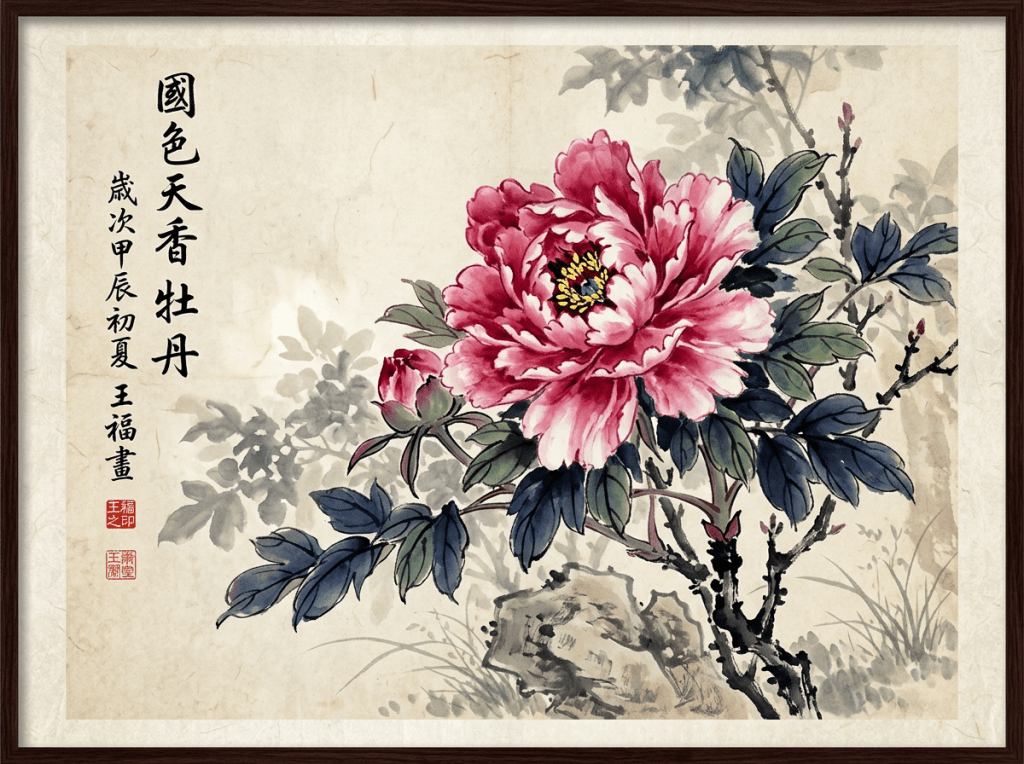
Peony (or The Bondmaid) is set in the 1850s in the city of Kaifeng, in the province of Henan, which was historically a center for Chinese Jews. The novel follows Peony, a Chinese bondmaid of the prominent Jewish family of Ezra ben Israel’s, and shows through her eyes how the Jewish community was regarded in Kaifeng at a time when most of the Jews had come to think of themselves as Chinese.
Review
“The feet bear the burden of the body, the head the burden of the mind, and the heart the burden of the spirit.”
If you’ve been here for a while, you already know that Imperial Woman made me fall in love with Pearl S. Buck. It only took one book to understand her strength as a writer, her sharp observational eye, her depth, and the way she handles Chinese culture and social dynamics without making them feel like a backdrop.
Also, quick context: my reading year has not been going great. Don Quixote took over my life for a while. I don’t regret reading it, but it completely threw me off my rhythm. And you know that feeling when you’ve spent so long on one book that your brain just craves stories again, multiple characters, multiple threads, that sense of movement? And then you pick up a few books in a row that are just… bad. Suddenly, you don’t even want to start anything unless you know it’s going to be good.
That’s exactly why I went back to Pearl S. Buck. Safe choice. Trusted author. No regrets.
And Peony did not disappoint.
Not your typical love story
If you’ve read enough Western books set in Asia, you probably already know the usual formula: forbidden love, Asian girl + foreign man, tragic romance, etc. I was fully expecting that. And honestly, I don’t like those stories. However, I chose to trust that Pearl S. Buck wouldn’t betray me like that.
So when this turned out to be nothing of the cliche…. I sighed in relief and thanked Pearl up in heaven.
Yes, there are feelings between Peony and David—but this is not a love story. Not in the way we’re used to. It’s a story about responsibility, identity, belonging, faith, and the quiet, often painful choices people make within those constraints.
The family: identity vs belonging
“In the city the remnant of the Jews, less now than two hundred should, went about their business and forgot who they were. But Madame Ezra in her own house kept the feast days of her people . It was lonely keeping, for only she and Ezra and David ate the unleavened bread at Passover.”
One of the most interesting dynamics in the book is between Ezra and Naomi, his wife.
Naomi is deeply committed to her identity as a Jew. She wants her son, David, to grow into a leader, to return their people to Israel, to preserve tradition at all costs. There’s a kind of intensity to her—at times it feels very close to fanaticism, even if it never fully crosses that line.
Ezra, on the other hand, is more… reflective. More conflicted.
He looks at what’s happening to Jews in the West—persecution, violence—and compares it to their life in China, where they are accepted, respected, and integrated. He himself was raised partly by a Chinese wet nurse, and you can feel that this shaped his openness.
It is fascinating to see their interactions and to try to understand both their points of view. Naomi, with her strong identity, rejecting life in China as more than an intermediate situation, Ezra, with his open personality and unstable roots in Judaism seeing China as a very good permanent home.
Peony: not who you think she is
Now, Peony.
She gives the book its title, and yet she’s not the kind of central character you might expect. She doesn’t dominate the story, but she definitely shapes it.
She’s a bondmaid, which puts her at a lower level in the household hierarchy. Yet, she’s one of the most intelligent and emotionally perceptive characters in the book. What I loved most about her is that she’s not passive, at all! She schemes. She adapts. She lies when she has to. She manipulates situations, however not in a malicious way, but in a way that allows her to survive and stay close to the people she cares about.
When David is set to marry, you’d think she’d try to make him know her love for him, she’d try to win him somehow. Well, that’s not what happens. She immediately understands what that means for her position, her place in the house. What does she do then? She doesn’t rebel. She doesn’t collapse into heartbreak. She adjusts her strategy. She finds ways to remain in the household, to be useful, to be trusted.
There’s something almost surgical in how she navigates her world and honestly, that was one of the highlights of the book for me.
One of the moments that stayed with me is when Peony, struggling, asks a question we all grapple with.
“Here was that question: Was life sad or happy? She did not mean her life or any one life, but life itself—was it sad or happy? If she but had the answer to that first question, Peony thought, then she would have her guide. If life could and should be happy, if to be alive itself was good, then why should she not try for everything that could be hers? But if, when all was won, life itself was sad, then she must content herself with what she had. Now this old question thrust itself before her, and she found no answer in her heart.”
I won’t tell you how that continues, but it was such an emotionally charged and wise discussion that you must read the book for it. I also think that this precise moment defines these characters. It shows their understanding of life and puts the foundation to their choices.
David: a very complex arc
David’s evolution is just as compelling.
He starts off as what you’d expect—a carefree child, somewhat dismissive of the weight of his identity. That’s shaken tho when news arrive of Jews being persecuted in the Western world. What was once just a background fact about who he is, suddenly becomes something heavy, something unavoidable. He goes through a kind of an existential crisis questioning his faith, his place, what it actually means to belong to a people.
“Would he keep himself separate, dedicated to a faith that made him solitary among whatever people he lived, or would he pour the stream of his life into the rich ocean of all human life about him?”
While he never quite becomes the leader his mother imagined, he grows into something else: a grounded, thoughtful, deeply responsible man. By the end, the choices he makes, especially when it comes to Peony, aren’t impulsive or romantic, but deliberate, difficult, and shaped by everything he has come to understand about duty, family, and himself.
There is love between Peony and David, but it’s not loud, not dramatic, not self-indulgent. They don’t put their feelings above everything else. They understand the weight of duty (family, marriage, social structure) and they act accordingly. But that doesn’t mean the feeling disappears. It just… transforms.
And somehow, that made it hit harder.
Because it’s not about what they say or do in obvious ways. It’s about the small decisions, the protection, the sacrifices, the things left unsaid.
What the book teaches you
One thing Pearl S. Buck does incredibly well is slipping cultural detail into the story without making it feel like a lesson.
You get glimpses of:
- daily life in a foreign household
- the role and reality of bondmaids
- customs like foot binding
- the structure of the city, even down to how theft and informal systems worked
- the relationship between local life and the imperial court
It’s the kind of information you didn’t even know you were curious about – until you’re suddenly completely absorbed in it.
Final thoughts
I liked this book so much. Peony, David, his family and wife, the situations they find themselves into, nothing extreme, nothing short of unbelievable. It’s a piece of literature woven with historical facts and reading it satisfied both my hunger and need for stories AND my knowledge and understanding of just how complex and diverse Chinese history is.
Also, I’ll repeat what I always say: read about Chinese history. Not just the past hundreds of years, not just modern headlines, not just the simplified narratives. We’re talking about thousands of years of culture, systems, and perspectives. And the more you read (from different types of sources) the more complicated and interesting everything becomes.
And if you want a story that reflects that complexity, without turning it into a lecture, Peony is a very good place to start.









 Musings of a reading addict
Leave a reply to Michelle Cancel reply