Keywords: Japanese occupation of Korea, Korean Independence Movement, Second World War, Social history Korea, Korean History
Genre: Historical Fiction
Length: short medium long
Country: Korea
Synopsis from Goodreads
In 1917, deep in the snowy mountains of occupied Korea, an impoverished local hunter on the brink of starvation saves a young Japanese officer from an attacking tiger. In an instant, their fates are connected—and from this encounter unfolds a saga that spans half a century.
In the aftermath, a young girl named Jade is sold by her family to Miss Silver’s courtesan school, an act of desperation that will cement her place in the lowest social status. When she befriends an orphan boy named JungHo, who scrapes together a living begging on the streets of Seoul, they form a deep friendship. As they come of age, JungHo is swept up in the revolutionary fight for independence, and Jade becomes a sought-after performer with a new romantic prospect of noble birth. Soon Jade must decide whether she will risk everything for the one who would do the same for her.
Review
I picked up Beasts of a Little Land by Juhea Kim on a whim. I was wandering through my bookstore with no particular title in mind, simply browsing the shelves, when this book caught my eye, and I thought, why not? I knew absolutely nothing about it. I did not know what it was about, I did not know what kind of story awaited me, and I certainly did not expect that, a few days later, I would finish it in tears and then leave the house for a very long walk because I could not immediately return to ordinary life after reading it. I came home still carrying the weight of it, and for a while I was not even sure whether I wanted to write this review today or wait a few days until the emotions settled. Even now, I feel almost speechless.
“Everywhere around them, life was happening without their knowing, and their lives were also happening in the presence of all else. All existences were touching lightly as air and leaving invisible fingerprints.”

The first thing I have to say is that this is a debut novel, and I genuinely cannot understand how a first novel can possess this kind of assurance. Something extraordinary has happened to my reading life this year, because I have encountered several astonishing debuts, and this one stands beside them effortlessly. Juhea Kim writes with the confidence of someone who has been telling stories for decades. The book feels immense, not in the sense that it is long (it’s not but it could have been twice its size, still not enough) but in the sense that it contains an entire world.
It also happens to touch nearly every subject that is closest to my heart as a reader of history. It explores the Japanese occupation of Korea and the wider violence that spread through Korea, China, and Manchuria; it confronts the devastation of opium addiction; it examines the response of Western powers in the early stages of the conflict; it looks unflinchingly at the fate of women living under foreign occupation, especially Japanese occupation; and above all it asks what human beings are capable of doing in order to survive, and how they learn to justify those choices to themselves.
Yet for all its historical breadth, this is not a book that sacrifices intimacy. It is equally a novel about resilience, about continuing to move forward when every visible sign suggests defeat, and about the many forms that love can take: unrequited love, abandoned love, impossible love, feeble love, love that remains even when life forces two people apart or even love that abandons. One of the reasons I found it so overwhelming is that it understands a truth that many novels avoid, namely that life does not always become what we hoped it would become, and that meaning can still exist even when our deepest desires remain unfulfilled.
“Now that I’m older I know that life is not about what keeps you safe, but what you keep safe, and that’s what matters the most.”
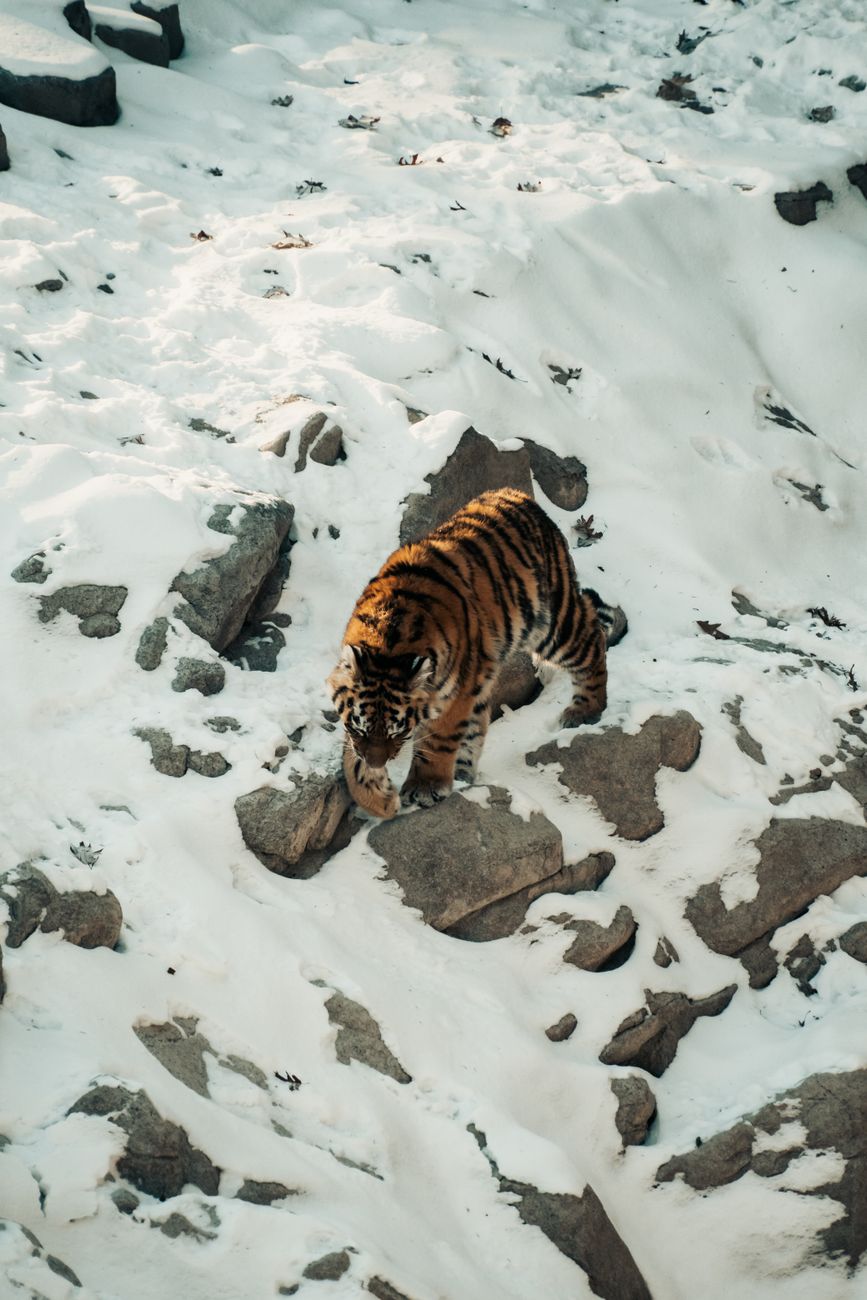
Describing the plot is surprisingly difficult because so much happens, and because I want desperately to preserve the experience of discovery for anyone who has not yet read it. The opening, however, is unforgettable and reverberates throughout the novel like a myth. A group of Japanese soldiers in Korea enter a winter forest and discover a local man lying in the snow, nearly dead. They feed him and ask him (not nicely) to guide them out of the woods, but before they can escape they are attacked by a tiger. What follows has the quality of legend rather than realism: the man rises, walks toward the tiger, screams, and after a suspended moment of eye contact, the tiger turns away and disappears into the forest. That scene establishes the book’s peculiar atmosphere, suspended between history and folklore, between family legacy and legend.
From there the story unfolds outward, and we meet Jade, a young girl sold by her impoverished family to Miss Silver, a celebrated courtesan who trains girls in culture, music, conversation, and the arts required to move among powerful men. Miss Silver secretly supports the Korean resistance, and later sends Jade, together with Lotus and Luna, her own two daughters, to Seoul under the protection of the formidable Lady YeDan, Dani. Through these women the novel reveals an entire hidden network of influence, survival, and political resistance. We also encounter figures such as Lee MyungBo, devoted to the struggle against Japanese rule, and Kim SungSoo, whose path through history is shaped by a very different understanding of survival. Another central character is Nam JungHo, whom we first meet as a desperately poor boy surviving in a Seoul street gang, and whose story becomes one of the novel’s deepest emotional currents. I will say no more, because this is a book whose power depends on allowing its characters to reveal themselves gradually.
“There are just two things in the world that give you true confidence. One is overcoming difficulties on your own, and the other is being deeply loved. If you experience both, then you will be confident for the rest of your life.”
What astonished me most was how completely Juhea Kim avoids cliché. These characters never feel like representatives of ideas or convenient instruments of the plot. They possess distinct voices, distinct morals, distinct personalities, distinct ways of loving, fearing, and enduring. As the novel progresses, it begins to feel less like fiction and more like recovered history, because events refuse to arrange themselves into the satisfying patterns that historical fiction often favors. People do not become heroic at the exact moment when the plot requires heroism; they do not receive the rewards that readers have been trained to expect; they do not suddenly transform into different versions of themselves in order to produce a neat conclusion. Their choices remain painfully, convincingly consistent with who they have always been.
The lives these characters end up living are not the lives I imagined for them, and yet when I reached the final pages I understood that no other ending could have been true to them. The novel preserves their authenticity until the very last sentence.
“If only I could I would pluck off the stars from the night sky and toss them all into her garden and that wouldn’t even be enough.”
To conclude this review
I loved this book so much that it surprised me. Unless another novel performs a miracle in the remaining months of the year, I suspect this will be my favorite book of 2026. I am absurdly grateful that I happened to be browsing a bookstore shelf on the day I found it, and that this particular spine happened to be at eye level. Sometimes reading feels governed by chance, and occasionally chance hands us a book that seems to alter the temperature of our inner world.
I have almost run out of words, which is perhaps the highest compliment I can give a novel. All I can do now is praise it and ask, with complete sincerity: please read this book.





Leave a Reply