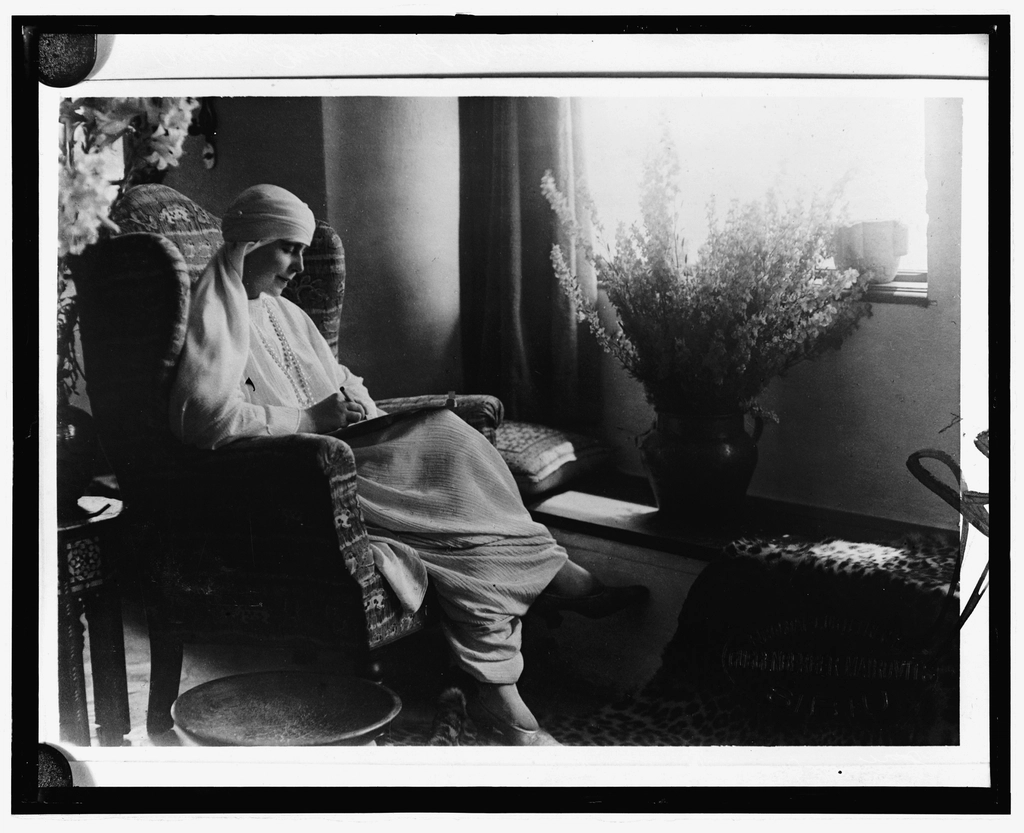
Keywords: First World War, Queen Marie of Romania, Queen Marie Biography, King Ferdinand I of Romania, Easter Europe Monarchies, Romanian History
Genre: Non fiction, Biography, History
Length: short medium long
Country: Romania
Synopsis from Goodreads
From her birth into the ranks of European aristocracy to her efforts to save Roumania from the hands of the Communists, this biography provides a colorful portrait of the famous queen.
Review
I wouldn’t really know how to explain it, but in the past few months I have found myself becoming increasingly fascinated by history. Not just by Chinese history, although that is certainly still occupying a very large portion of my reading life, but I have also developed a renewed interest in Romanian history, and particularly in biographies.
For a long time, I was actually hesitant to bring anything related to Romania onto this blog. I suppose I had convinced myself that it wouldn’t be of much interest to anyone outside the country. Romania is a place that, sadly, has fallen victim to a great deal of prejudice, confusion, and misinformation, and I think this does the country a great disservice. Of course, Romania has its problems, and there are plenty of things that could be improved about the country today, but I have always felt that its potential, its beauty, and especially the complexity of its history are very often overlooked.
All of this brings me to today’s book, The Last Romantic, Hannah Pakula’s biography of Queen Marie of Romania
Romania was a monarchy before it became the communist state most people probably associate with it today, particularly because of Nicolae Ceaușescu. The first king of modern Romania was Carol I of Hohenzollern-Sigmaringen, who was succeeded by his nephew Ferdinand I. Ferdinand married Marie, who came from an extraordinarily distinguished European royal family. She was the granddaughter of Queen Victoria through her father, Prince Alfred, Duke of Edinburgh, and the granddaughter of Tsar Alexander II of Russia through her mother, Grand Duchess Maria Alexandrovna.
And this is one of the reasons I found this biography so fascinating. Marie was never simply a Romanian queen in isolation. Her entire life was woven into the European royal and political networks of her time.


One of the things that immediately made me trust Pakula’s work was the amount of documentation behind it. From the very beginning, she makes it clear how extensively she was able to consult private archives, including material from royal families and historical institutions. She had access to letters, family papers, contemporary newspapers, personal notes, and, importantly, Marie’s own writings.
And this is particularly important because The Last Romantic is not written through a rose-coloured lens. Marie is not presented as some flawless heroine who did everything right and somehow managed to save the country through sheer force of personality. She was complicated, sometimes contradictory, sometimes selfish, sometimes impulsive, and certainly not always what we would consider a role model by modern standards. I actually appreciated this immensely, because it made her feel like a person rather than a monument.
Her marriage to Ferdinand is a particularly interesting example. As was so often the case with royal marriages, this was not a match made primarily for love. It was a political alliance, and Marie herself was very young when she entered into it. Their relationship was never the great romantic love story that one might expect from a book called The Last Romantic. There was, however, mutual respect and, eventually, genuine affection and friendship. Marie wrote about Ferdinand with both appreciation and frustration. He could be kind and loyal, but he was also shy and hesitant at precisely the moments when she wanted him to take a stronger position.

Marie, meanwhile, was not exactly known for being shy or hesitant.
Her romantic life was complicated, and the book does not shy away from that either. There were other relationships, rumours, and scandals, all of which became part of the public perception of the queen. And then there is Prince Barbu Știrbey, who has now somehow become one of my favourite characters in Romanian history. The relationship between the two of them is fascinating, and there were certainly enough rumours surrounding it to keep everyone interested. I will leave it at that, because I genuinely enjoyed discovering that part of the story for myself.
But what makes Marie particularly fascinating to me is that her importance goes far beyond her private life.
She lived through one of the most turbulent periods in Romanian history, including the First World War, and Romania’s decision about which side to join was anything but simple. Ferdinand was a member of the German Hohenzollern family, while Marie was British and Russian royalty by birth. The question of whether Romania should join the Central Powers or the Triple Entente was therefore not simply a matter of choosing one political alliance over another (especially when you take into account the existence of a secret). There were family relationships, diplomatic considerations, territorial ambitions, personal loyalties, and the very real question of what would give Romania the best chance of surviving and eventually expanding its position in the region.
Her political influence was enormous, and she was deeply involved in the political life surrounding her husband and the Romanian state. She had an extraordinary ability to insert herself into situations where she believed that Romania’s interests were at stake, and she was not particularly interested in sitting quietly on the sidelines simply because she happened to be a woman.


The Queen is known to this day as the ”Mother of the Wounded” as she and her daughters worked diligently as a nurse in military hospitals. Today we have a country-wide clinic chain named after her, Regina Maria.
The Last Romantic: the history behind the history
We often learn about major historical events as a series of dates and countries. Country A allied itself with Country B, Country C entered the war, this battle happened, that treaty was signed, and so on. But countries do not actually make decisions, people do. Governments do, kings and queens do, ministers and diplomats do. And those people have families, friendships, rivalries, fears, ambitions, prejudices and personal interests.
Reading the correspondence between Marie and King George, or between her and members of the Russian imperial family, gives you an entirely different perspective on these events. You begin to understand not only what happened, but why particular people thought that a particular course of action was necessary.
What I found particularly moving was the contrast between how complicated Romania’s position was and how deeply Marie eventually came to love the country.
There were moments in this book that were honestly painful for me to read as a Romanian, particularly when I encountered some of the dismissive or critical things that members of other European royal families said about Romania. But I appreciated that Pakula did not try to soften those things for the sake of making the country look better. They were part of the historical reality. And perhaps that is precisely why I trusted the book more.
There is one thing I should mention before I finish, because I have seen other reviewers point it out as a criticism of the book.
The Last Romantic is not a biography of Queen Marie in the strictest sense.
Although Marie is undoubtedly at the centre of the book, there are substantial portions where Pakula steps away from her and spends considerable time explaining the political and historical context surrounding her. Sometimes Marie almost disappears from the narrative for a while because the author is busy explaining what was happening around her, setting the stage for decisions she would later make.
Personally, I did not mind this at all. In fact, I think it is one of the book’s greatest strengths. I wanted to understand not only what Marie did, but why she did it. I wanted to know what was happening around her, what pressures she was under, what the people surrounding her wanted, and what information she had available to her when she made those decisions. For me, that additional context made the biography much richer.
So, yes, I would very much recommend The Last Romantic. Not only to people interested in Queen Marie, and not only to Romanians, but to anyone who enjoys biographies that use an individual life as a way of opening a much larger historical window.
If you have ever been interested in Romania, Romanian history, Queen Marie, or even just the complicated history of Eastern Europe, I would genuinely love to know about it. Have you ever visited Romania? Have you read anything about its history? Or is there another Eastern European country whose history has fascinated you? Let me know. I am increasingly convinced that I have only just started scratching the surface of this particular rabbit hole.







Leave a Reply